
The dispatch
A weekly letter on creative work, building studios, and the business of making things.
…besides James Clear's three bullet points, the only ones I actually read. Thank you for sharing these thoughts, they were truly inspiring.
I usually skip newsletters these days. But this one really was the perfect mix.
Your tone is always so encouraging and kind, and your emails are on a short list of those I enjoy reading. You have a gift for being supportive.
Charging more… isn't the answer.
Pricing seems to be the number one thing coming up right now. Coaching calls, the community, my inbox... it's the same conversation everywhere.
And when I listen closely, it's really two questions:
1. What do I charge?
2. And where do I find the clients who will pay it?
Almost all of the pain that lives where creativity meets business (at least on the client work side) comes from one of those two.
The usual answer I hear to both is the same: charge more.
Typically, that advice is wrapped in a sexy methodology: Value based pricing. Subscription pricing. Retainers. Sprint based pricing.
But if you strip them down to brass tacks, every one of them is purely a justification for landing on a bigger number... and that's it.
The number goes up. The conversation ends. Nobody asks what that number actually has to cover.
Let me show you what I mean.
A $1,000 website Critique and a $1,000 website are the same price... right?
Same price, completely different businesses.
One is an hour or two. The other eats three months of your life, one of them spent chasing a logo file that "should be in the Dropbox." Same number at the top, wildly different number at the bottom.
Here's the truth: a price is a ratio, not a number. What you get, over what it costs you to deliver.

(Don't worry about the math just yet. I've got something for that later.)
I know this ratio intimately because I lived on the wrong side of it for years.
At one point in my studio days, I was running 53 clients at once.
Fifty-three of them, most with two or three projects stacked inside, and I was proud of every one. I wore it like a badge of honor.
Fifty-three clients... look at me go.
Then one night I sat down and did the math. I added up everything I'd brought in, divided by every hour I'd put in. You know what it added up to?
About three dollars an hour. (not a typo, unfortunately)
And those weren't spare hours I had lying around. They were dinners I ate at my desk. Movies I didn't see with my wife. Every personal project I told myself I'd get to when things slowed down.
Now... I don't regret it.
I paid my dues in those years. I learned to work fast, really fast, and that speed is still one of the most valuable things I own. But it was genuinely rough. I was working every hour there was, and the bank never seemed to notice.
Fifty-three clients and three dollars an hour. Sound familiar?
Your numbers are probably different, but I'd bet the shape isn't.
These days, a creative project needs to be around $20,000 before it really gets my attention.
But I'll still happily take a $500 job.
Wait... what?
Both are true, because it depends entirely on how much of me the job eats.
For me, an hour for $500 is a great business. Three months of full-time, focused effort for $20,000 is not.
Your numbers are probably different. You might not have a family to support. You might be side hustling or building your portfolio. So your numbers and mine won't match.
But the ratio will.
And I'm convinced that ratio is behind nearly every pricing conversation I've had lately. Without revealing too much, these are some real world numbers I've seen over the past month:
- A $3,000 project that came in around 12% profit margin
- An $1,800 monthly subscription running near 11% profit
- Someone holding half his week open for a client who pays for about 25% of it.
- A five-figure creative project where the revision rounds ran well past what was contracted
- Someone giving half their working time to family, at half the income they need
Here's the crazy thing: Depending on the person, these might not be problems with their Rates. But they are certainly problems with their ratios.
So how do you actually figure this ratio out?
You start with something I've said before and will keep saying until it sticks: You are the pilot. Your business is the plane. Two separate financial beings. Now follow that thought all the way down with me.
If you are truly separate from your business, then you are its single largest expense. Bigger than software. Bigger than the accountant.
And most of us have never once put ourselves on the ledger.
Let's run one.
You charged $4,000 for a project. Direct costs, the stuff you paid for out of pocket, came to $600. You spent 90 hours on it.
Your hourly burn rate is $25, meaning your expenses plus your own salary, spread across the hours you're open.
Ninety hours at $25 means your time cost the business $2,250.
$4,000 minus $600 minus $2,250 leaves $1,150. That's your real profit... about 29% margin.
But now let's look at what that profit really means by translating it to time:
$1,150 profit / $25 burn rate = 46 hours.
That one project gave you an extra week's worth of runway.
A week where you can pursue passion projects, launch that next income stream, or actually (GASP) take a paid vacation.
And that's why margin (the ratio) matters more than rate (the price)…
Because margin is the only thing on that whole ledger that buys you anything.
- A healthy margin buys runway: days, then weeks, where you don't have to sell anything to keep the lights on.
- It buys back the hours you've been quietly giving away at three dollars apiece.
- It buys the studio work. The personal project. The second revenue stream you keep saying you'll start when things slow down.
So how do you calculate all of this? Well, that's the fun part.
I built a free calculator to do just that.
Give it what you charged, your hours, your burn rate, and your direct costs. It hands back your real profit, margin, actual hourly, and how much runway that project bought you.
Nothing to buy, no catch on the other side, I promise. You don't even have to add your email in there to use it.
One request: run your last project through it, not your best one.
Why the last one?
The best one will make you feel good, and the last one will tell you the truth.
The calculator is one piece of a bigger system on pricing, managing your margins, and protecting your creative spark… and we walk through all of it inside the Maker Division curriculum.
But start with the calculator. Start with one project.
Charging more is half the answer. This is the other half - and it's the half you start with.
But wait… what about the second half of the question? How does one create a brand that attracts better clients? And what about the rest of the business around your creativity? How should you monetize your skills? How can you provide more value in your projects through process?

Well… that, my friends, will be covered later this month. We've got a whole roster of fun stuff coming your way that will support your solo studio.
Stay tuned,
Ben Burns
Co-Founder, Maker Division
P.S. It's September… our birthday month… and last year we went all out with some crazy deals and new product drops. This year? We've got more in store. Keep an eye on your inboxes, cause you're not going to want to miss it!
Skulls & Flowers

On Repeat
By Driveways Sounds like everything good from when I was 17 years old. Mix pop punk with post hardcore… it's almost like you can hear the echo from the garage where this song was born.
Jordi Gandul
Artist we love
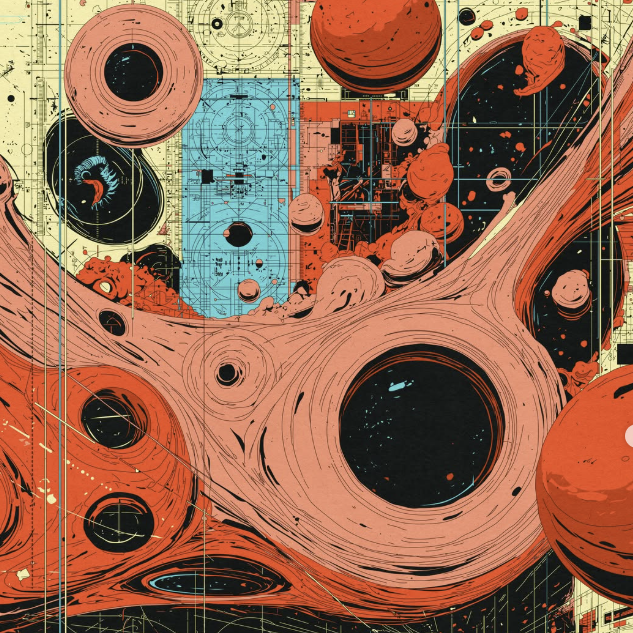
Since I tell you what, sometimes the algorithm just delivers… you know what I mean?! Check out these intricate abstract compositions from Jordi. I can't get over the blend of organic and geometric/mechanical shapes… and the palettes… chef's kiss.
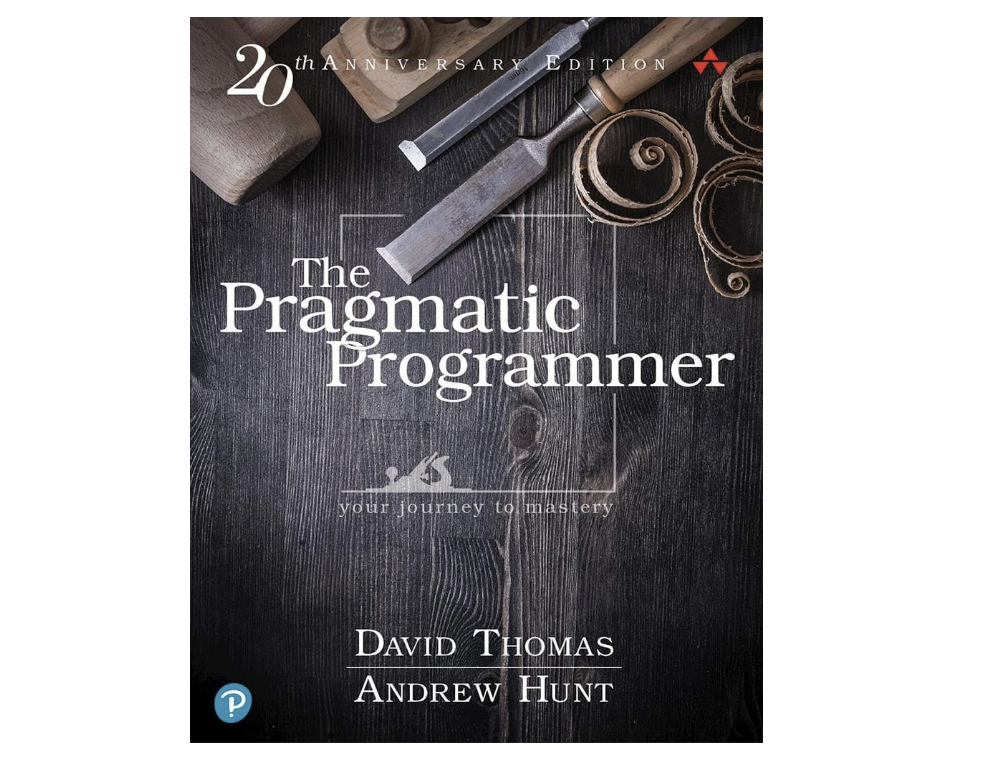
The Pragmatic Programmer
THE Bookshelf
I wasn't sure if I should add this book… but, hey, it's what I'm actually reading right now. Old news for you engineers, but I'm fascinated by how programmers think. And as I build more software tools, I want to learn the right way to work. And apparently, there's no better book.
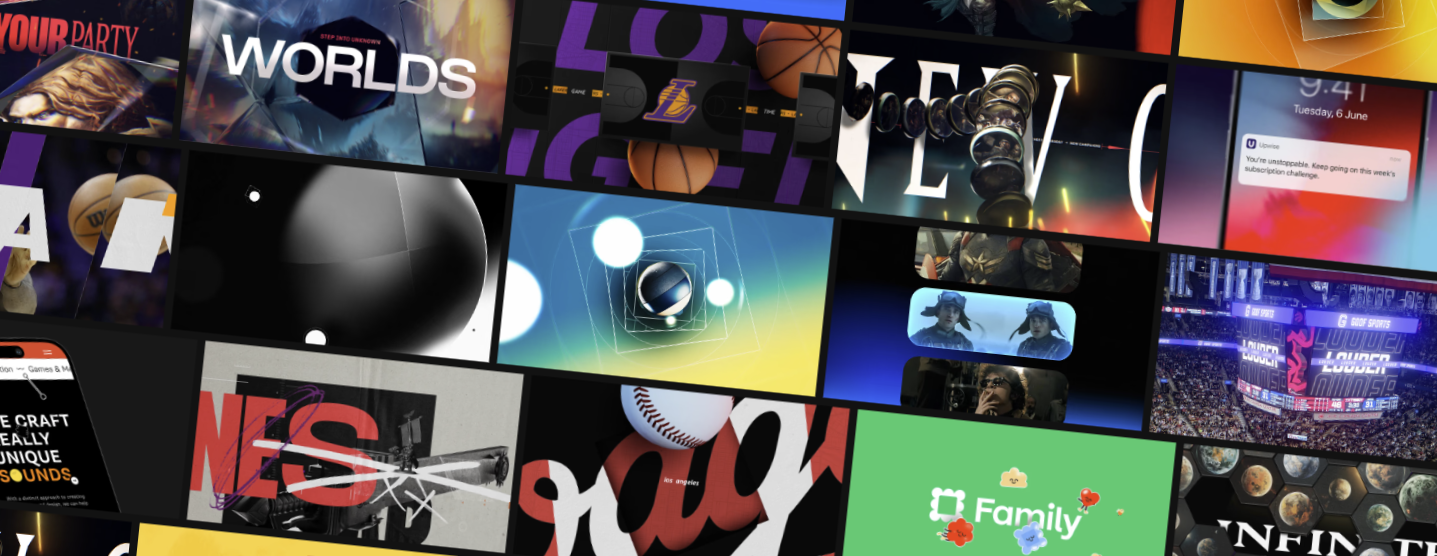
Alan Finch is a founder and creative director in Massachusetts, and he has been with us about three years. In June, he won a $50,000 contract producing keynote visuals for an AI startup. The biggest of his career by a wide margin.
What he credits is not a clever pitch. It is that nothing had to be built in a panic. His strategy, his case studies, his website and his decks were already done, made through the Maker Division modules, so when the RFP landed he was ready to answer it the same week.
Which is the front half of everything we talked about above. Remember, fifty thousand dollars is that top line, and a very good one. The work now is protecting what it gets divided by. Go get it, Alan!
Member Win
aLan Finch
“I recently just won a 50k contract doing keynote visuals for an AI startup... My strategy, case studies, and website have all been created using the Accelerator modules and I felt incredibly equipped to respond to the RFP.”

The Dispatch archive
Charging more… isn't the answer.
Your home office might be the problem
The best career advice I've heard all year.
I didn't have a portfolio
Some thoughts on doing work for yourself.
Trent Reznor gave me an idea.
The hats you never wanted to wear…
A Maker Vegas Spring Recap
The good idea fairy… and other momentum murderers
The Business Burnout Cure
Looking back, I know now that was never the case.
I force myself to do this when I'm stuck
I survived. Barely.
When they ask for too much…
How to Get More Done… Maybe
Relationships are everywhere you look.
My resolutions for 2026
This Has Nothing to Do With Business (Except It Does)
Slow December? Read this.
Zach here, your friendly neighborhood community manager.
Before you vanish into peppermint-scented oblivion…
The two villains every creative knows too well
Stop hiding in your shadow portfolio.
Beyond Clients: What we learned in Vegas
You see, the issue isn't always too little focus…sometime it's too much.
Oh no they didn't- client edition
Thinking about raising your rates?
The work doesn't love you back
When doing it all… stops working
How do you make money when life falls apart?
The obstacles we create
Stuck? Try this.
I didn't realize my business (and life) needed this
5 Essentials That Every Creative Studio Needs
Big Money Energy (And How to Get It)
Perfect Client Testimonials: Free Template
Your overwhelm reset button
Surviving the sprint: What to do when things get busy.
Have you put in the reps?